Showing posts with label silene. Show all posts

Monday, July 18, 2011

Royal Catchfly catches a Butterfly


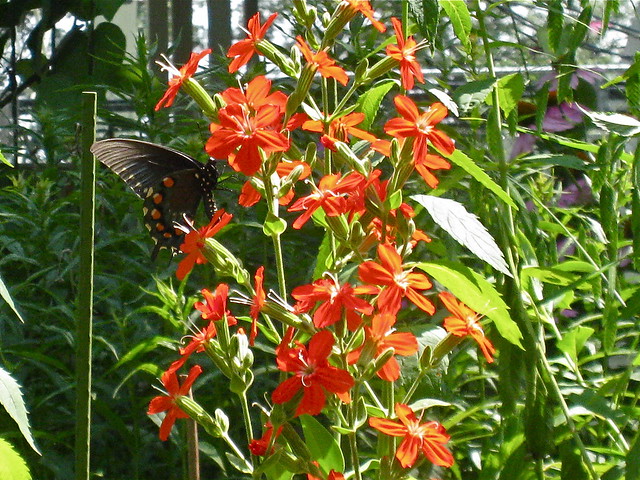
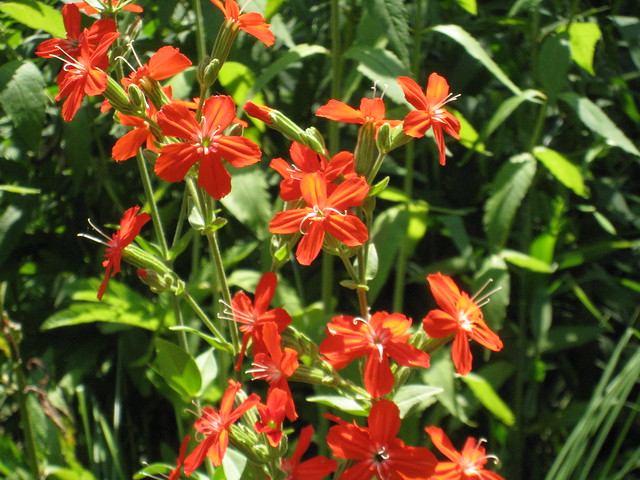
It's not always easy to get advice on growing a native plant species. Since I'm crazy about hummingbirds, I searched for Missouri natives that specialize in hummingbirds for pollination. Royal Catchfly (Silene regia) is one of the most spectacular. I wrote about its spring-blooming cousin, Fire Pink (Silene virginica) in May this year, but Royal Catchfly is taller and blooms for a longer time. The earliest my catchflies have ever bloomed is June 29. All these photos were taken this week.
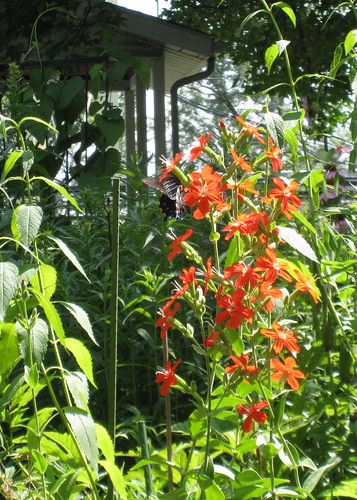


According to Ozark Wildflowers, by Don Kurz, they are found in the Ozarks on the borders of glades and prairies, although they're considered endangered in the rest of the state. That could mean it likes alkaline soils because of all that karst topography in the Ozarks. I was told the plant likes moisture and sharp drainage. Hmm… Not a common combination in my clay soil. I dig an extra deep hole, add crushed limestone, and hope for the best. But wait a minute, what's that near the top left bloom?
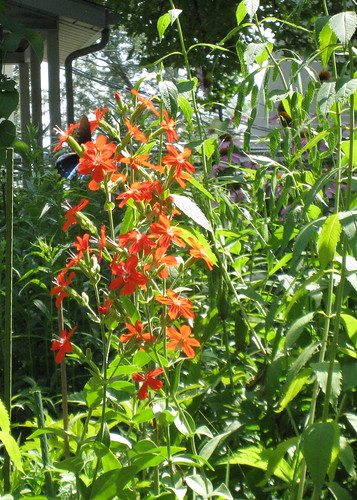
It's a hummingbird plant, right? What's that gorgeous blue?
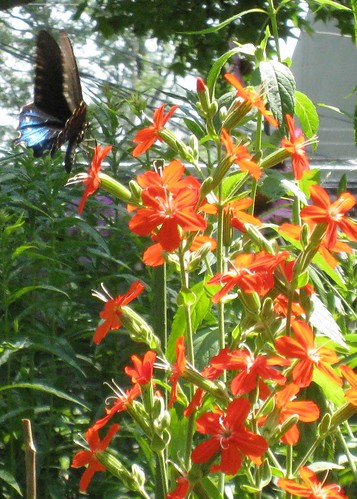

I guess butterflies don't read the books.


Monday, May 9, 2011

Fire Pink

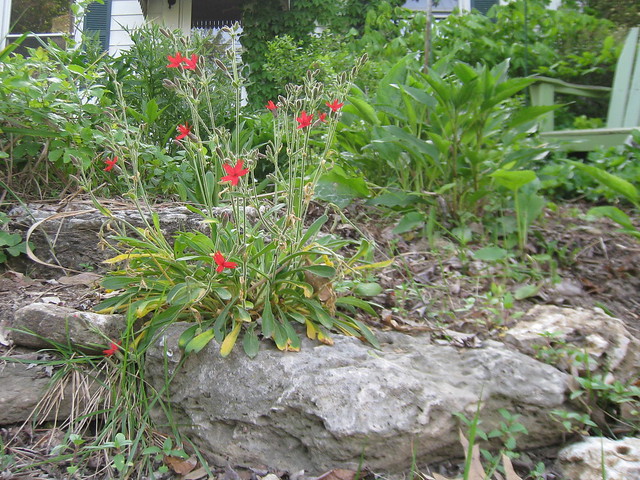
Besides having a stunning red flower, Fire Pink (Silene virginica) attracts hummingbirds, and I'm all about that! So I made a number of clumsy attempts to grow it in my garden and always failed, until last year. That's when I decided to get serious about imitating the habitat where I first found it: on a dry, rocky, west-facing hillside in Jefferson County, Missouri.

A glade garden may seem an odd choice in an east-facing, suburban front yard, but that's where I have a slope and the greatest hours of sunlight. I started by removing the Bermuda grass, and some of the dry, clay soil. I replaced it with crushed limestone, and topped that with the rocks. I had to purchase rocks that I could lift, so I looked for ones that could fit together to give the impression of a rock shelf. Then I tamped and pounded till they seemed stable. Once you install an artificial limestone/dolomite ledge, you're pretty well committed, so I really needed a success.

I had a moment of panic when I reread Kurz' description of the typical habitat in Ozark Wildflowers: "wooded slopes in sandstone, chert, or igneous soils." That suggested acid soil, not clay and limestone. As they say though, the plants don't read the books, and the Silene gods smiled on me. My Fire Pink bloomed well last year and returned for an even stronger show this year. Dan Tenaglia's website, MissouriPlants.com, has really great photos of this plant in the wild, and the rocks in his photo look suspiciously like limestone/dolomite.

The stem and calyx of Fire Pink or Catchfly are sticky. John Hilty's website, Illinois Wildflowers (which I talked about in January 2011), says that the purpose of that sticky substance is to discourage ants from "stealing" the nectar. An animal "steals" nectar when it takes nectar without pollinating the flower. Hilty says however that little is known about Fire Pink's pollinators, although is is presumed to be hummingbirds. Even though I've only seen a hummer at the blooms once, I don't have any doubt Silene is a hummingbird plant.