 |
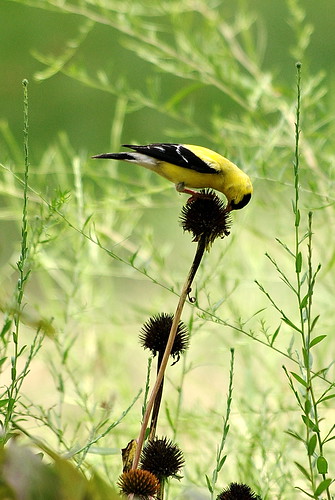
| Photo by Richard Skoonberg |
Hybridized garden varieties are shorter than the species—that is, less than 4 feet tall. Nurseries have developed purple coneflowers that are orange, red, or deep purple. If you like to play with scale, try ‘Little Annie,’ a new variety. It’s miniaturized—less than 10 inches, with many small flowers. I have one in a container one the front porch. Modern garden varieties hold their petals closer to horizontal, but I prefer the charming droop of the unimproved native plant.
Of course the main reason to have loads of purple coneflowers is goldfinches. Cornell doesn’t mention it in their fantastic bird website, but rodeo-riders—and perhaps the clowns too—are reincarnated as goldfinches. When the blooms are finished and most gardeners would get out the shears, that’s the time little yellow birds hop onto that bloomed-out conehead and ride, Sally, ride! My Flickr friend Richard Skoonberg captured this photo as a male goldfinch tweezes the seeds out, then flies off to feed his nestlings. American Goldfinches are one of the few species of birds that feed seeds to their young, not insects. In the process, they drop a few seeds in new areas, allowing the plant to spread. Purple coneflowers are indispensable in a wildlife garden!

