Showing posts with label winter botany. Show all posts

Thursday, February 3, 2011

Thunder Sleet and Snow


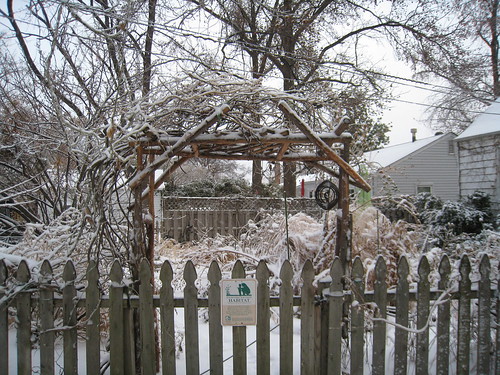
In the last 2 days, our area got hammered with 3 inches of sleet, accompanied by thunder, followed by freezing rain, then dusted with an inch or so of snow. A few minutes drive north, they got 12 inches of snow! Most businesses and schools are closed--even interstate highway 70 was closed till this morning.
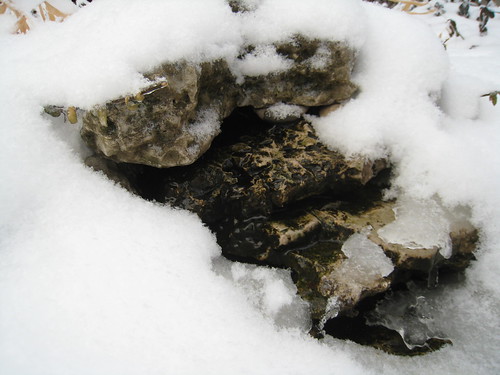
I try to keep the pond flowing a bit. The pump is hanging in there, but sometimes I pour some hot water over the ice to open a hole. All day long there's a steady stream of Dark-eyed Juncos and White-throated Sparrows dropping in for a drink. The neighbor's cat hops over the fence every day too.
I'm a bit worried about the Carolina Wrens. Freezing rain is particularly hard on them. On the MObirds listserve, Bill Eddleman reminded us that after the hard winter of ’76-77 their population plunged.
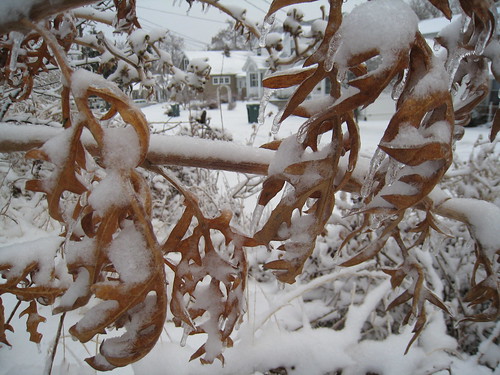


Leaves of Compass plant (Silphium laciniatum) are beautiful in snow. I would miss these if I followed the usual practice and chopped off my plants for the fall "cleanup."
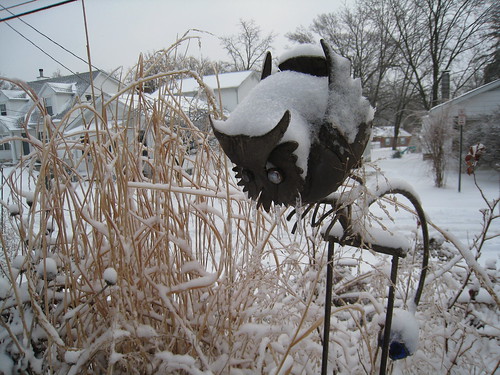

One of my favorite garden tschotskes is this screech owl made with a copper float ball from a toilet tank. Normally, he teeters back and forth with the wind. We have wind today, but the poor wee thing is frozen solid.


Kokopelli is the god associated with agriculture, fertility, and music. How long till spring, Koko?

Sunday, November 28, 2010

The Mystery of the Black Gums

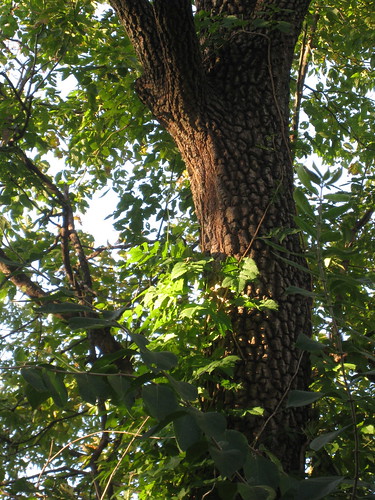
My neighbor's mystery tree in early October. AMcC
In the back of a neighbor’s property stand the mystery trees. They certainly must be wild trees. Instead of being installed in the center of the lawn, as human landscapers like to plant, these trees grew in a group along an unmowed property line. Perhaps birds dropped the seeds, along with a bit of fertilizer, while perched on the rusting remains of a fence.


At first I thought of persimmon. The chunky, dark bark seemed right. The leaf seemed right, but where were the fruits? What is with that 45° turn about a third of way down most branches? It looks like each branch has a bent elbow with palms up, saying “I dunno.”  


I suspected Black Gum, but thought of that as a swamp tree. These grew in soil that was average in moisture. I even looked with binoculars, searching for small berries without success. And I had read about Black Gum’s spectacular fall color, something that I had never noticed in these.

The mystery began to unravel when I read Don Kurz’ description of Black Gum’s bark as “alligator hide,” a description I had previously read applied to persimmon. He also mentions that Black Gum is “the first tree to turn color, typically beginning in August, and one of the first to drop its leaves” (Kurz, Trees of Missouri, 218). No wonder I had missed the autumn show! HortNet helped with the mystery of the invisible fruit. They note that only female trees bear fruit, the fruit blends with dark green leaves in summer, and any ripe fruit is quickly gobbled up by birds in late summer or early fall.
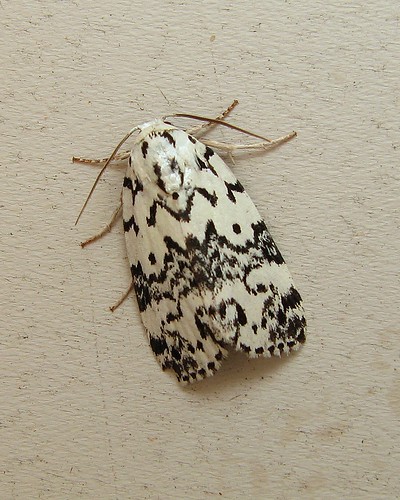
The Hebrew Moth, photo by Jenn Forman Orth

Many sources describe spectacular red fall color. This is variable. Most trees in my neighborhood--now that I recognize them--have yellow leaves in fall. I saw one young tree however that had the most beautiful red leaves, and these persisted until late October.
Most often, Black Gum is a lowland tree, but not a tree of the swamps as I had thought. It's characteristic elbow branches are interesting in winter and a great help in identifying it.

Besides being a great nectar-producer in spring and fruiting tree for fall migrating birds, Black Gum is the host plant for an interesting underwing moth, called the Hebrew moth,  Polygrammate hebraeicum. Heitzman, in Butterflies and Moths of Missouri mentions that the  larvae “conceal themselves by pressing into crevices in the bark of the host plant” (263). My moth photo comes from Flickr friend Jenn Forman Orth. Check her original in full size along with a lively discussion about the origin of its name.
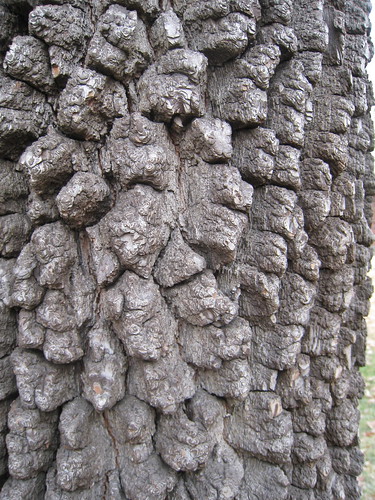
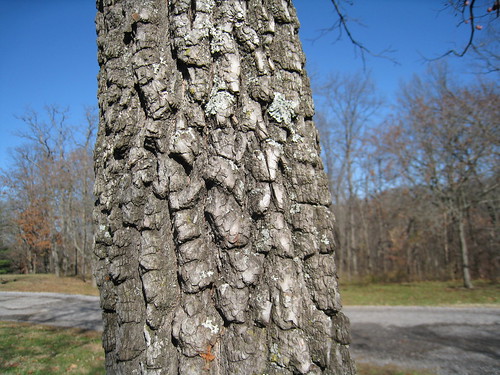
The "alligator-hide" bark of the Black Gum AMcC

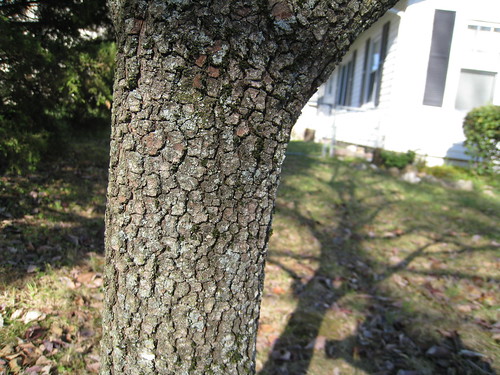
Bark of a young Flowering Dogwood forms squares AMcC
Persimmon tree bark forms rectangles AMcC


David Sibley, in The Sibley Guide to Trees, compares the bark of three similar trees. The related Flowering Dogwood has scaly bark in square blocks, the unrelated Persimmon’s bark is rectangular blocks, while Black Gum’s bark on mature trees is “deeply furrowed.” I see this not only on the trunk but also on large limbs. Perfect for hiding a caterpillar! 


More mysteries to come in my next post…