Showing posts with label bird records. Show all posts

Tuesday, July 2, 2013

Birding Legend, Bill Rudden

Bill Rudden at Riverlands Migratory Bird Sanctuary  Photo by Al Smith, used with permission

"Bird watcher"--even today, for many people, the image of Miss Jane Hathaway leaps to mind. When Bill's hobby shifted from hunting to bird watching, stereotypes tumbled. Bill was a firefighter for the city of St. Louis, Missouri (retired as a captain), and an athlete. As recently as 2007, he competed in IronMan triathlons. I was shocked and saddened when I heard of his death on June 30, 2013, by way of a comment on this blog.

Bill is a legend in the St. Louis birding community for his role in finding what Birds of the St. Louis Area calls, "the most famous bird to visit St. Louis" in 1984. Bill was birding along the Mississippi River near the Alton Dam on a miserably cold December day and spotted a large gull with a dark mantle. He alerted other birders, including birding experts Phoebe Snetsinger and Ron Goetz, and together they identified it as a Slaty-backed Gull--according to  Birds of the St. Louis Area, "the first known occurrence of this Siberian/Alaskan species in the lower 48 United States (113)."

Bill gets a nod in Olivia Gentile's biography of Phoebe Snetsinger, Life List: A Woman's Quest for the World's Most Amazing Birds (89-90). A long-time member of Webster Groves Nature Study Society (WGNSS), he often birded with Phoebe. According to Life List, in 1978, Snetsinger decided to try to break the record for the greatest number of bird species seen in a year in the St. Louis area. She enlisted Bill's help, and succeeded in listing more than 274 for the year.

Bill led the WGNSS field trips on Saturdays for a number of years in the 1980s and was well-known in the St. Louis birding community. His sense of fun was as legendary as his mad birding skills. The first time I met Bill was about 1991. That year, the WGNSS annual banquet was held at one of St. Louis' premier birding spots, Tower Grove Park. A few of us gathered before the event to enjoy some spring birding in the northwest section of the park. Big Day was only two days away, so when we ran into Bill,  members of the group peppered him with questions about his latest sightings.  (Big Day: birding jargon for a competition for the greatest number of bird species seen within a single day.) Referring to his own Big Day plans, he told us, "Oh yeah, my team's parachuting in at midnight."

As a birder, you've got to know your birds, and it helps to know your birders too. I recall a trip to Riverlands, hearing someone say, "Wait--isn't that Rudden over there? What's he lookin' at?" The whole bunch folded their scopes and scurried over to hear what Bill had to say. He was always generous with his news, ID tips, and wisecracks. He was active on the MoBirds listserve, sharing photos as well as reports. His last post on the list reads, "5-30-13 Horseshoe Lake SP Madison county IL. Mostly cormorants were loafing on a snag.  Main lake off old dredge point."

I hope more folks will share their tales about Bill and other birders. If you're unfamiliar with blogs, just click the word "comments" below to read other's comments and leave your own. There's no need to sign in.

How to comment on a blog


Sunday, September 4, 2011

Last Kite of the Season

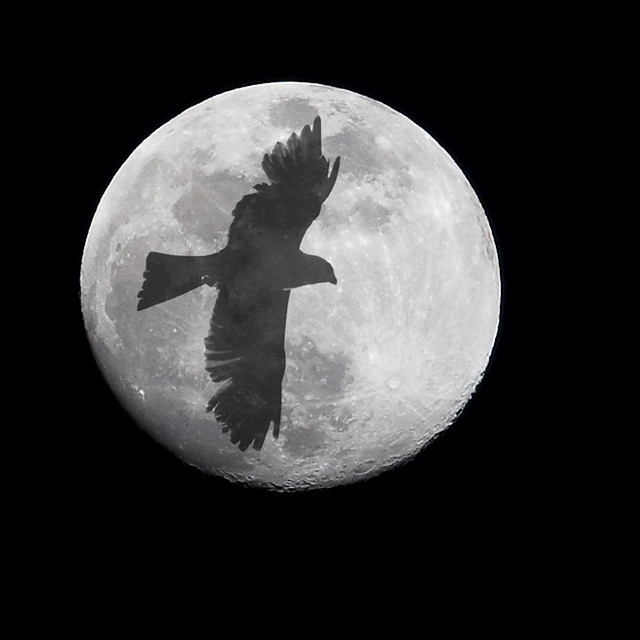
Mississippi Kite's keystone-shaped tail shows in this silhouette composite photo by George Thomas
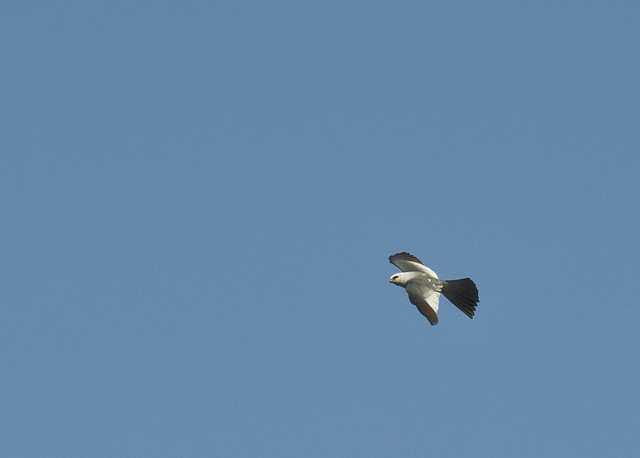
I may have seen my last Mississippi Kite of the year yesterday. My puppy Chunk and I visited Emmenegger Nature Park, climbing the trail along the bluffs above the Meramec River and paused at one of the glades. Chunk investigated the scents along and under the limestone rocks. I scanned the wide valley below with my binoculars. The landscape is urban, with remnants of oak-hickory woods on the hills. Floating over the former site of the Chrysler plant, a beautiful male Mississippi Kite sailed on the warm, still air. The open glade afforded me a rare view of the kite from above. Contrasting with the dark grey body, I could see the white head and secondaries—the flight feathers close to the body along the trailing edge of the wing. The creative image above is by George Thomas, and the beautiful one below is by MRHSfan. Thanks for licensing your photos with Creative Commons, George and MRHSfan!

adult male Mississippi Kite, photo by MRHSfan
I see Mississippi Kites almost daily in my area, starting in early May. They can be hard to spot early in the season. They tend to be silent and avoid being conspicuous as soon as they begin nesting. A friend who has a nest nearby said she often sees them flying low—under the radar, so to speak—as they approach the nest.

By August, the young are in flight and I occasionally hear them call. It's a strange sound—imagine a flycatcher impersonating a Broad-winged Hawk's two-note whistle. Click the play button to hear the recording below, also Creative Commons. Kites show up predictably at favorite perches around the neighborhood; always on dead snags atop mature trees. About 3 weeks ago I saw a group of 6 kites, including at least 2 juveniles, in a half-dead oak. Not far away, I could hear a 7th bird calling. Sometimes 2 or 3 will circle overhead. Are these local birds or the first migrants? I wish I knew.

When I first started birding seriously, in the early 90s, I saw my life Mississippi Kites in Webster Groves. Birders at that time said Webster was about as far north as they were found in summer, but now they breed up into Iowa.

They are predominantly insect eaters, so they must head south in fall. Conventional wisdom says that all the kites will be gone from Missouri by the end of the first week of September, but curiously, the first are record of Mississippi Kite was in autumn, on September 22, 1956 (Birds of the St. Louis Area; Where and When to Find Them, Webster Groves Nature Study Society, 1995). They migrate through Texas, along the east coast of Mexico, through Central and northwestern South America. Their non-breeding range is Bolivia, western Brazil, Paraguay, and northern Argentina. See this range map on the Cornell U website. Check out this spectacular video of a flock of kites migrating through SoberanĂ­a National Park in Panama, taken by Dave Jackson in April, 2007.

You might also enjoy:
Why do People Think Bird Watchers Are Nerds?
Fragrant Sumac in the Winner's Circle
Urban Birding, Texas Style

Sunday, August 21, 2011

A Bird Bath for Hummingbirds

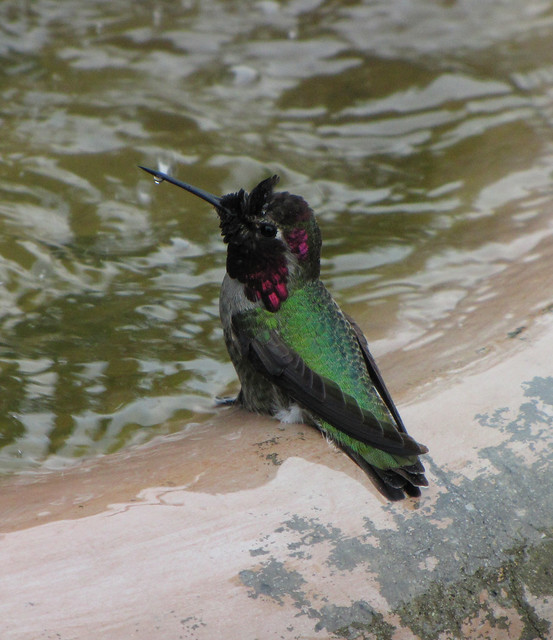
Anna's Hummingbird photo by randomtruth
On a particularly anxious day some years ago, I glanced out the kitchen window, looking at the viburnum leaves, covered with with rain drops. Movement caught my eye—a hummingbird, diving chest first into the droplets, flailing her wings and splashing around in the microliters of water on the leaf. Because I'm a human and humans always look for meaning—especially when they're really stressed—I read a message in this brief, extraordinary scene: "Things will work out fine." And they did.

Hummers get plenty of liquid as they lap up nectar from a trumpet creeper bloom or from your feeder, so they don't need to drink from a bird bath as a Mourning Dove or Cedar Waxwing might. However hummingbird banders tell me that the feathers are often sticky with nectar, both natural and artificial, so they do need to bathe to keep their feathers in top condition. Hummers can bathe in a rain shower, or you can try to attract them with water by…
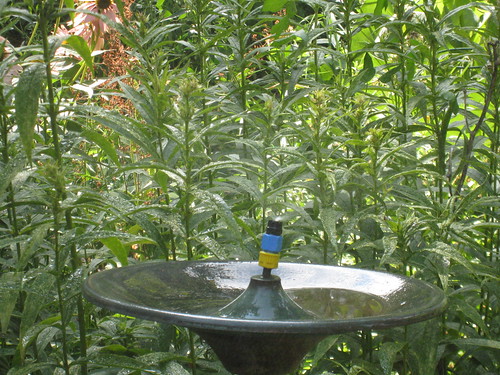
Providing a mist fountain. I use a connector with shut-off valves so I can have two hose lines. 
After I finish watering the container plants, I completely shut off the water. Then I open the valve on the line that leads to the mister. 
This little device will run a long time on the residual water pressure within the hose. 

An easier method is to hose down some large leaves. 

I hope you have a chance to see a hummer take a "leaf bath." If you do, and I'd love to see your photo!

For those of you keeping track, here in the Midwest, Anna's Hummingbird, seen in the photo above, is not one of our normal birds. In fact, there are only 5 records for the state of Missouri, most recently in 1997—the only record in my area. Thanks, Josh Uffman, for compiling, organizing, and sharing the state records. 

The charming photo of an adult male Anna's is by randomtruth, and I'd like to thank him for sharing his photo with a Creative Commons license. Be sure to check out his blog, The Nature of a Man. He wrote a terrific post about Anna's Hummingbird: California Christmas Ornaments.